
Plan a safe camping trip in bear or wildlife territory with tips on food storage, noise management, and other essential safety precautions to protect yourself and enjoy your adventure.
- Understanding the Risks of Camping in Bear and Wildlife Territory
- Importance of Food Storage in Wildlife Areas
- How to Store Food Safely While Camping
- Managing Noise to Avoid Attracting Wildlife
- Real-Life Case Example of Bear Encounter and Safety
1. Understanding the Risks of Camping in Bear and Wildlife Territory
Camping in areas inhabited by bears and other wildlife can be a thrilling and rewarding experience, but it requires careful planning and awareness. The presence of large predators, such as bears, can pose risks to your safety and the safety of your camp. These animals are often attracted to food, scents, and human activity, so it's essential to be mindful of your surroundings and take precautions to avoid attracting wildlife.
Understanding the risks and learning how to prevent dangerous encounters are key components of a safe camping experience in wildlife territories. While bears are usually not aggressive towards humans, they can become dangerous if they feel threatened or if food is easily accessible. In addition to bears, other wildlife such as raccoons, coyotes, and mountain lions may pose risks, making proper food storage and noise management critical for safety.
2. Importance of Food Storage in Wildlife Areas
Proper food storage is one of the most crucial aspects of camping in bear and wildlife territory. Wildlife, especially bears, have an excellent sense of smell, and they can be attracted to food even from a great distance. If food is not stored correctly, animals may come into your campsite, potentially causing harm or damaging your belongings.
In addition to keeping yourself safe, proper food storage helps prevent animals from associating humans with food. This is important for preserving the natural behavior of wildlife, which is essential for their survival and minimizing conflict with humans.
3. How to Store Food Safely While Camping
There are several effective ways to store food safely while camping in bear and wildlife territory. Here are the best practices:
3.1. Use Bear-Resistant Containers
Bear-resistant containers, such as bear canisters, are a must-have for camping in bear territory. These containers are designed to prevent bears from accessing food and are highly effective. Place all food, trash, and toiletries in these containers and store them at least 100 feet away from your sleeping area. Bear canisters are especially useful in areas where hanging food may not be feasible.
3.2. Hang Food in Trees
If bear-resistant containers are not available, hanging food in trees is another reliable method. Hang food and scented items (like toothpaste and soap) at least 10 feet above the ground and 4 feet away from the trunk of the tree. The food should be hung as high as possible to make it difficult for animals to reach. Make sure the tree branches are sturdy enough to support the weight of the food.
3.3. Use Designated Food Storage Areas
Many national parks and camping areas have designated food storage areas, such as bear lockers, that are designed to keep food safe from wildlife. If available, always use these storage facilities instead of storing food in your tent or vehicle. These lockers are typically bear-proof and are the safest option for food storage in wildlife areas.
4. Managing Noise to Avoid Attracting Wildlife
Noise is another factor to consider when camping in wildlife territory. While noise may not be a direct attractant for most animals, excessive sound can alert animals to your presence, making them more cautious or curious. By keeping noise levels to a minimum, you can avoid drawing attention to your campsite and reduce the likelihood of wildlife encounters.
4.1. Keep Conversations Low
When camping in bear and wildlife territory, keep conversations and other noises to a minimum. Speaking in a normal tone is fine, but avoid shouting or making loud sounds, as this could attract animals from a distance. If you are camping with a group, establish a quiet zone during the evening hours to ensure you aren't disturbing the natural environment.
4.2. Use Silent Lighting
Flashlights and lanterns can also attract wildlife if used excessively. Try to limit the use of bright lights around your campsite and avoid shining lights into the surrounding wilderness. Flashing lights may disorient animals, while excessive light may draw their attention to your camp. Opt for dim, warm lighting or use campfire light to minimize the impact on wildlife.
4.3. Avoid Playing Music
Playing music or other loud noises may be a fun way to enjoy the outdoors, but it can also be disruptive to the natural environment. While you may not think of it as an issue, playing music at a campsite in bear or wildlife territory can attract unwanted attention. It’s best to enjoy the silence of nature and respect the wildlife around you by keeping noise to a minimum.
5. Real-Life Case Example of Bear Encounter and Safety
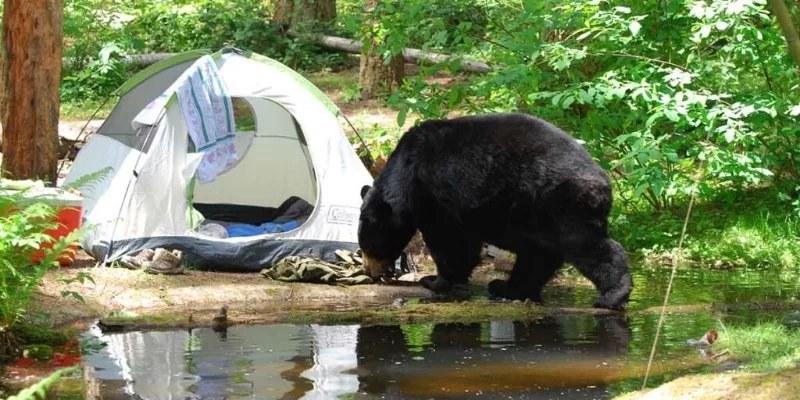
A camper at a popular national park once had a close encounter with a bear after failing to properly store their food. The camper had left a bag of food in their tent, which attracted a curious bear to the campsite during the night. Fortunately, the bear was more interested in the food than the camper, but it caused significant damage to the tent and equipment. This close call could have been avoided with better food storage practices and more careful attention to noise levels.
This real-life case highlights the importance of following proper safety guidelines when camping in bear or wildlife territory. At Pine Cliff Resort, we provide expert advice and guidance to help campers plan safe and enjoyable trips in wilderness areas, with tips on food storage, noise management, and wildlife safety.
The Bridgewalk Riverside Cabins
100 Y Bridge Blvd, Galena, MO 65656, USA
Visit Location PageLuWiSoMo Campground
W5202, Aspen Rd, Wild Rose, WI 54984, USA
Visit Location Page